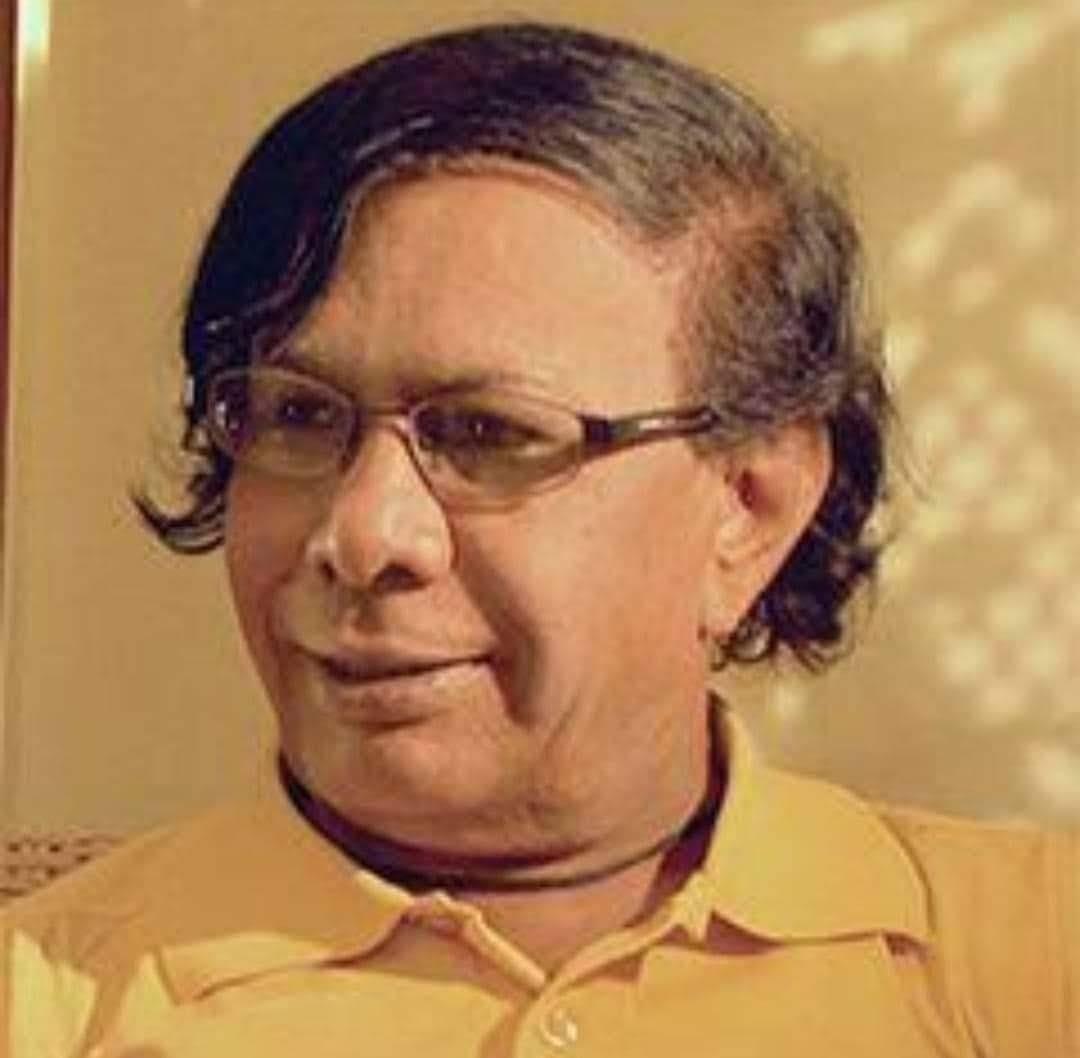
Sudhakar Gaidhani (India)
“THIRST AND TEARS “: A POEM BY THE COSMIC POET SUDHAKAR GAIDHANI
A Critical Reflection: When Thirst Turns into Beauty… Yet Remains Unquenched
In this condensed and evocative poem, the poet does not merely present a fleeting scene, but opens a window onto a profound human experience—where thirst is no longer a physical need, but a symbol of an inner void seeking true fulfillment.
The image begins in a barren desert, a space that appears devoid of life, yet is, at its core, filled with waiting. When the rain falls, it does not arrive as lasting salvation, but as a fleeting moment—a brief possibility suggesting that something might change… even if only for an instant.
Here, thirst is not weakness, but motion—desire, an urgent reaching toward life. It gathers the raindrops with longing, as though attempting to rescue itself from within, as if each drop carries the possibility of survival.
Yet what follows is not salvation… but transformation.
The drops, meant to quench, turn into pearls.
Here emerges one of the poem’s most striking and inventive images: water—the essence of life—transforms into pearls, something beautiful and precious, yet stripped of its original function. Water is meant to be drunk… pearls are meant to be admired. The reader is thus confronted with a dazzling image that ultimately fails to fulfill its purpose.
This is not merely a poetic contrast, but a cognitive rupture—one that redefines the relationship between value and need, between what shines… and what truly saves.
This tension deepens in the final moment, when the eyes fill with tears. Water returns—but in another form: the form of sorrow. And still, no relief is found.
Thirst does not drink tears
This line is not simply a conclusion, but a moment of full revelation—built upon a powerful and unsettling paradox: tears are water, yet they are a kind of water that cannot sustain life.
Here, the poem reaches its philosophical peak. It does not merely offer a beautiful image, but creates a tension between resemblance and essence—between what appears to be something, and what it truly is. It is a moment in which the reader realizes that proximity does not equal fulfillment, and that substitutes—no matter how similar—may fail entirely to meet the original need.
Beyond its aesthetic brilliance, the poem gently opens a deeper contemplative space, hinting—without stating—at a subtle fracture within the human experience:
That one may possess something beautiful and valuable, and yet remain unable to touch what one truly needs.
Not everything that shines can save us, and not everything that resembles water can quench.
In this way, the poem moves beyond imagery into meditation—on desire itself, and on the quiet confusion between what we want… and what we truly need.
Despite its philosophical depth, the language remains clear and unpretentious. It does not impose meaning, but invites reflection. It does not explain… it reveals. It does not persuade… it awakens.
Conclusion
“Thirst and Tears” is not merely a poem about deprivation, but about that subtle moment when we encounter something beautiful… only to realize it is not enough.
It speaks of the delicate distance between value and necessity, between brilliance and sustenance, between what we see… and what truly saves us.
And so, its impact lingers quietly within— like a thirst that does not cry out, yet never fades.
THIRST AND TEARS
Once,
in the desolate desert,
a sudden shower of rain
fell for a fleeting moment.
Instantly,
my anguished thirst
gathered those
raindrops into a pitcher.
And then—a miracle !
All the drops
were suddenly transformed
into a multitude of
lustrous white pearls.
Witnessing this marvel,
my eyes welled up
with sorrowful tears;
But thirst never drinks tears.
@Sudhakar Gaidhani 
Reviewed by SAFAA DAWOOD (Egypt)













Leave a Reply