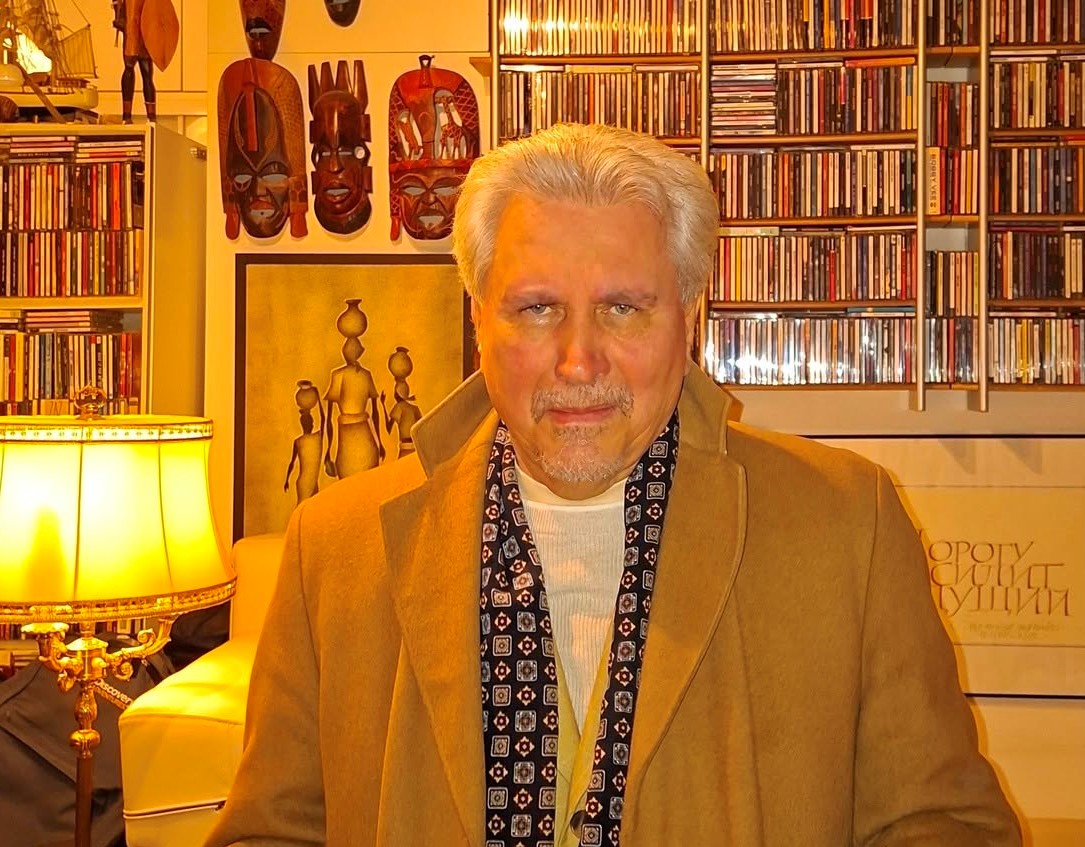
Prof. Dr. Vassili Bouilov
EUROPE
Europe, where thought may freely reign,
Has drunk the boundless gifts of civilizations,
Absorbed through suffering, through truth, through pain,
And, schooled by Renaissance, struck against degradation.
A blow against the spiritless and vile,
Thus carving out a pathway in the mind;
Declaring war the root of evil all the while,
And giving life its meaning, humankind.
A healthy mind within a body whole:
For Europe, happiness is more than words.
She strives to live beyond the grief that takes its toll,
And hails the rights and freedoms of the world.
Europe has a body, Europe has a mind;
The health of nations, her life’s enduring thread.
And when some distant land cries out in pain,
As physicians do,
The wound must first be read.
But how to understand a land whose savage ways
Have held their course for centuries untold,
Whose motives, laws, and logic, set in iron stays,
Are forged in chains of cruelty, harsh and cold?
Now evil rules where progress should have grown;
A neighbour stalks the world, deranged and wild.
Once more, the century has heard the old winds blown,
And watched aggression rise, conquest beguiled.
Its eyes are fixed on some ephemeral prize;
Its movements swift, absurd, devoid of sense.
The diagnosis speaks before our eyes:
Not legs deformed, but thought’s own architecture, dense.
Like cancer, when it threatens life entire,
The malignant growth must be excised in time.
But what of one who lies, again and yet again,
And cries that Europe is his foe, his crime?
The patient only staggers, falling back;
He has forgotten how to move ahead.
His eyes are fastened on the vanished past;
His turn will come, as destiny has said.
He stubbornly prepares his final fight,
Though half the Earth lies claimed beneath his hand.
In Europe, he is outcast, loser, blight;
The reckoning draws near, as days run through the sand.
Let unity of will become our theme,
Until the rivers run with blood no more!
Let not the dictates of the guilty reign,
However fierce the challenge, cruel the war.
The unity of Europe shall not break:
A fellowship of nations, free and strong!
For woven through this bond, for freedom’s sake,
Flows life’s own thread, where love and peace belong.
And may that thread, through every storm and scar,
Bind free-born nations in a world made whole:
A peaceful ocean, reaching near and far,
Where liberty and love unite the soul.
Translation into English by Dr. Arch. Franca Colozzo
ЕВРОПА
Европа, где свободно правит мысль,
Цивилизаций необъятный дар
Впитала через силу, через смысл.
Вняв Ренессансу, нанесла удар.
Удар по бездуховности
и злу,
Тем проложив в сознании свой путь,
Определив как корень зла войну,
И сформулировав тем жизни суть.
В здоровом теле
жив здоровый дух,
И счастье для Европы не слова.
Стремится жить без горя, без разрух,
Приветствует свободу и права.
Есть тело у Европы, есть и ум,
Здоровье наций – цель и жизни нить.
И если раздаётся где-то шум,
Как в медицине,
Следует лечить.
Но как понять страну, чей нрав свиреп
Уже на протяжении веков,
И строй мотивов, логики и скреп
Определён жестокостью оков?
Сейчас взамен прогресса правит зло,
Для всех – сосед с безумной головой.
В начале века снова понесло
Её в агрессии, захваты и разбой.
Нацелена на временный эффект,
Движения бессмысленно резвы.
Диагнозом является дефект
Конструкции не ног, а головы.
Как опухоль, немедля удалять,
Когда угрозу представляет рак.
Что делать с пациентом, врёт опять:
Везде Европа будто только враг.
И “пациент” лишь пятится назад,
Он не умеет двигаться вперёд.
Направлены лишь в Прошлое глаза,
Наступит и его черёд.
Настырно рвётся в свой последний бой,
Хотя владеет половиною Земли.
В Европе он и лузер, и изгой,
Финал расплаты отмеряет дни.
Единство воль как тема для стихов:
Реальной крови прекратить поток!
С диктатом не мириться их грехов,
Как вызов ни суров и ни жесток.
Сплочённости Европы не сломить,
Сотружество свободных сильных стран!
В основе этой связи – жизни нить,
Любви, свободы
мирный океан!
@Василий Буйлов
EUROPA
Europa, dove libero regna il pensiero,
ha attinto ai doni immensi delle civiltà,
assorbendoli attraverso il dolore e il vero,
e, educata dal Rinascimento, ha sferrato il suo attacco alla barbarie.
Un colpo contro il vuoto dello spirito e il male,
tracciando così un sentiero nella coscienza;
proclamando la guerra radice d’ogni male,
e dando alla vita il suo senso e la sua essenza.
Mens sana in corpore sano:
per l’Europa la felicità non è soltanto parola.
Anela a vivere oltre il dolore e il danno,
e saluta i diritti e le libertà del mondo.
Europa ha un corpo, Europa ha una mente;
la salute delle nazioni è il filo della sua esistenza.
E quando una terra lontana grida il suo tormento,
come fa il medico,
occorre anzitutto comprenderne la ferita.
Ma come intendere una terra dai costumi feroci,
che da secoli percorre la medesima via,
con moventi, leggi e logiche atroci,
forgiati nelle catene di una crudele tirannia?
Ora il male governa là dove il progresso doveva fiorire;
un vicino minaccioso si aggira, folle e selvaggio.
Ancora una volta il secolo ode antichi venti infuriare,
e vede levarsi l’aggressione, la conquista e il saccheggio.
Il suo sguardo è fisso su un effimero trofeo;
i suoi passi sono rapidi, assurdi, privi di ragione.
La diagnosi si palesa davanti ai nostri occhi:
non sono le gambe a essere deformi,
ma l’architettura stessa del pensiero.
Come un cancro, quando minaccia l’intera esistenza,
la crescita maligna va estirpata in tempo.
Ma che fare di chi mente ancora, senza vergogna,
e grida che l’Europa è sua nemica, la causa del suo tormento?
Il paziente arretra soltanto, vacilla e ricade;
ha dimenticato come si avanzi verso il domani.
Gli occhi sono incatenati a un passato ormai svanito;
anche per lui verrà l’ora del giudizio, come il destino annuncia.
Ostinatamente prepara la sua battaglia estrema,
benché già metà della Terra sembri stretta nelle sue mani.
In Europa è un reietto, un perdente, un esule senza nome;
il giorno della resa dei conti si avvicina,
e i giorni scivolano via come sabbia.
Diventi l’unità delle volontà il nostro canto,
finché i fiumi non scorrano più di sangue!
Non lasciamo che il dominio dei colpevoli governi,
per quanto aspra sia la sfida, per quanto crudele la guerra.
L’unità d’Europa non sarà spezzata:
un sodalizio di nazioni libere e forti!
Nel cuore di questo legame, in nome della libertà,
scorre il filo stesso della vita, là dove dimorano amore e pace.
E possa quel filo, attraverso ogni tempesta e ogni cicatrice,
unire nazioni libere in un mondo finalmente riconciliato:
un oceano di pace, senza confini né distanze,
dove libertà e amore ricongiungano ogni anima.
Traduzione di Dr. Arch. Franca Colozzo
***
Europe as Conscience, Body, and Prophetic Covenant in Vassili Bouilov’s Europe
Vassili Bouilov’s Europe is a politically engaged poem that combines historical reflection, moral denunciation, and a prophetic vision of continental solidarity. Written while the author was flying over Europe, the poem adopts an expansive perspective in which geography becomes an ethical landscape and Europe emerges not merely as a political entity, but as the custodian of intellectual freedom, human rights, and civilizational responsibility.
The poem’s opening celebrates Europe’s intellectual inheritance, particularly the transformative legacy of the Renaissance. Thought, freedom, and cultural plurality are presented as the foundations of a civilization that recognizes war as a root of evil. The classical maxim mens sana in corpore sano is reinterpreted through the image of Europe as a living organism whose physical and intellectual health depends upon the well-being of its constituent nations. This organic metaphor establishes the poem’s central conceptual framework: political disorder becomes a pathology requiring diagnosis and intervention.
The most striking rhetorical device is the extended medical allegory. The aggressor is represented as a patient whose destructive behaviour reveals a deeper structural disorder. The contrast between physical movement and intellectual impairment culminates in the assertion that the defect lies not in the legs, but in the head. This imagery transforms political condemnation into a moral diagnosis, suggesting that aggression arises from a distorted relationship with history, power, and reality. The recurring image of the patient who cannot advance beyond the past reinforces the poem’s opposition between historical nostalgia and forward-looking civilization.
Bouilov’s language is direct, polemical, and deliberately confrontational. Questions, antitheses, imperatives, and prophetic declarations generate an insistent rhythm that recalls the rhetoric of public admonition. The poem’s emotional force derives from the tension between the threat of renewed aggression and the conviction that European unity can withstand it. Its closing movement replaces denunciation with an affirmative vision of a fellowship of free nations, bound together by the enduring principles of love, peace, and liberty.
From a critical perspective, the medical metaphor is powerful but also contentious: its language of disease and excision risks reducing complex political realities to a stark opposition between health and pathology. Likewise, the poem’s categorical moral judgments privilege rhetorical urgency over political ambiguity. Yet these limitations are inseparable from its chosen mode of expression, which seeks not detached contemplation but an awakening of collective conscience.
Ultimately, Europe is a poem of warning and affirmation. Its prophetic dimension lies less in predicting a specific future than in issuing a moral injunction: freedom requires vigilance, peace requires solidarity, and civilization cannot remain indifferent to aggression. The final image of a peaceful ocean of love and liberty offers a counterforce to the poem’s darker imagery, transforming European unity into an ethical ideal whose significance extends beyond geographical borders. Bouilov’s work thus stands as a passionate poetic appeal for a Europe that remains faithful to its humanistic inheritance and courageous in defending the possibility of a shared, peaceful future.

Dr. Arch. Franca Colozzo







Leave a Reply