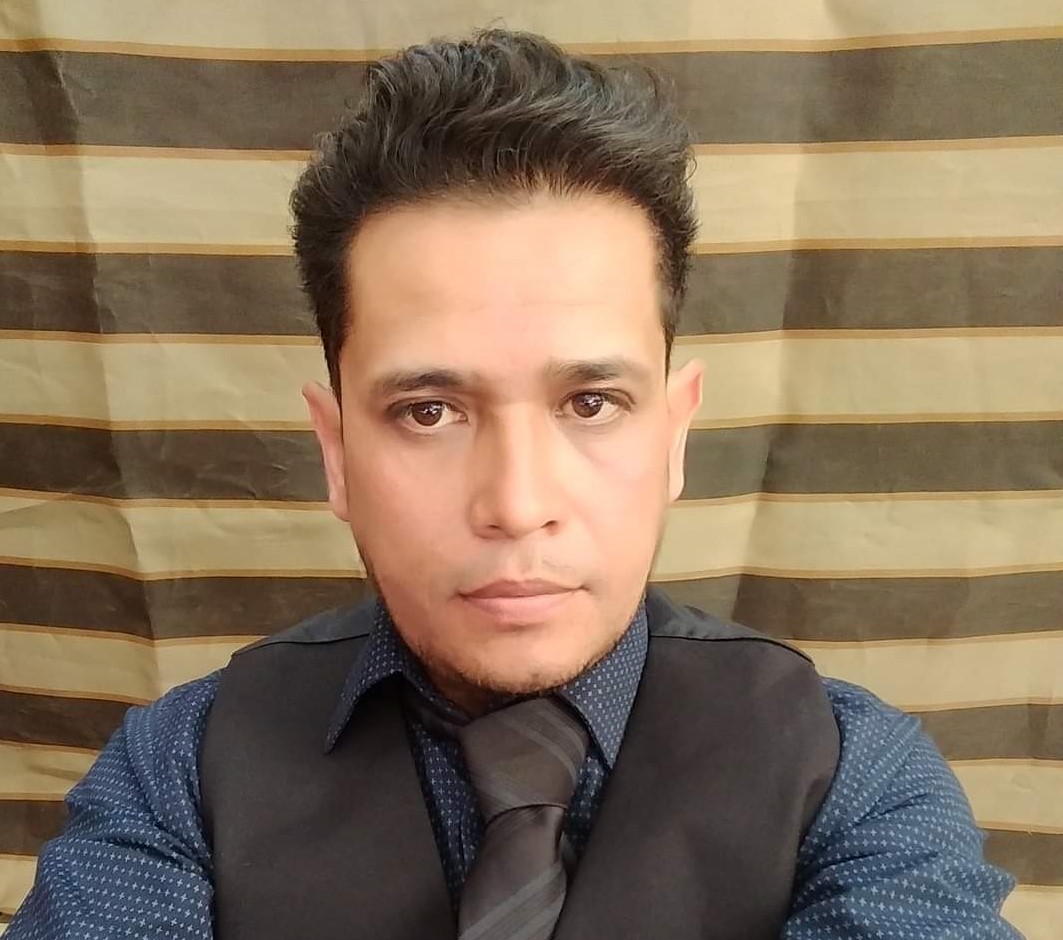
José Pablo Juárez (Mexico)
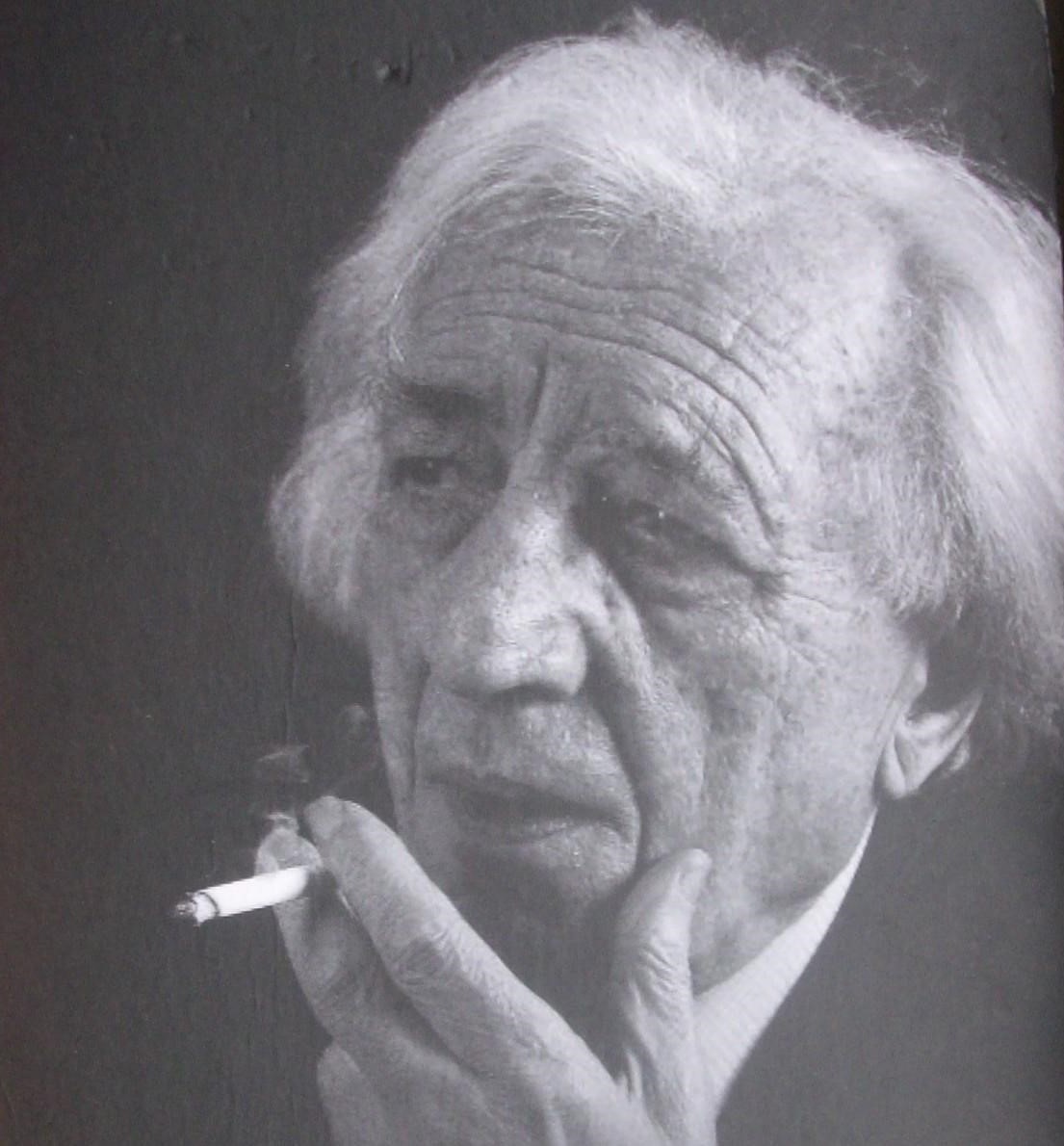
José Pablo Juárez (Josep Juárez) Mexican poet, his poems have been published in more than 40 anthologies around the world, in 2018 he received the naji naaman award (Lebanon) for his work “from your lips I will resurrect” and in 2020
Doctor honoris causa by the international forum for creativity and humanity of the kingdom of Morocco.
The Bard
I was a bard who found love and lost himself in its labyrinths. We lived an affection of titanic proportions; I wove verses for her that sowed nostalgia and melancholy in the soul, farewells steeped in a sadness as subtle as the whisper of the wind. I never suspected that those poems were the dark mirror of my fate.
I wrote of watching her fly and loving her in her freedom, capturing—without realizing it—her nature of wings against my own essence of solid ground. They say the worst punishment is to have your wish granted. I never imagined my gloomiest verses would take shape, that each letter and syllable would materialize with surgical precision. Was it a prophecy, or did my unconscious love sadness so much that it summoned it with its own whispers?
In the end, every omen was made flesh: she stopped at the threshold of the house, looked at the sky, spread her wings and left. I stayed there contemplating the firmament until her silhouette faded into the blue. From then on, writing sad verses stopped being a consolation and became torment: they were thorns that pierced the skin and sank into the entrails. My metaphors, once agile and airy, petrified all at once, as if her departure had turned our world of fantasy into rock. Not even the romantic solitude that wanders the nights like a ghost remained; only a heavy, mineral, mute emptiness.
Everything petrified. My world, which once expanded in six vibrant dimensions, shrank to the simplicity of three. What a cursed omen those poems were! I remember one where I defined myself as her calvary: cross, nails, and vinegar on her lips. But even in that darkness, I wished her well; I longed for a Saint of Arimathea to take her down from her cross, to rescue her from the martyrdom I myself embodied. I wished that someone would carry her naked body toward her resurrection, far from my weight. And I believe the saint came: he took her in his lap and made her be reborn in the sky. The bitter doubt gnaws at me: did I wish for my own ruin to secure her glory, or am I the victim of my own thoughts made real?
The poet’s death is not the end of life but absence: the indifference of a love that no longer admits idealization. While the man weeps, the poet writes; while the man consumes himself until he becomes ash, the poet, unmoved, composes his elegy over the embers of the fire. Sometimes I feel that resignation lived in me before your departure. I wrote with defeat already accepted, whispering to you between the lines: “When you return, bring me wildflowers; don’t run, spend your life and your spring, for I will wait in eternity.” I asked you to imagine placing them in my hands, though reality would force you to divide them between two vases on my grave.
The Doorstep of Reality
So I remained: alone, with my world turned to stone, sitting on the doorstep. There were no metaphors left to adorn my shipwreck. Being there was no mystical waiting, no hope of flowers on the pavement; here sadness does not bloom, nor does solitude whisper consolations. Only me, dwelling on the threshold of death, with petrified metaphors, awaiting a dawn without promises.
I remembered a children’s horror story written aeons ago: a boy and his monsters. Loneliness was a black hole that emptied the house of its inhabitants; anxiety, a cosmic octopus whose tentacles anchored fear in his chest. But the worst was the absence of love: a colossal clown, curly hair brushing the ceiling, begging for embraces so as to consume him in its emptiness. The boy wished for a tangible terror—a murderer at the window; he preferred the cold of lead to the invisible torture of his mind. In the end, he discovered the only weapon: indifference. He turned around, ignored them, and slept. But I, on this stone doorstep, am no longer that boy: I lost the innocence to ignore monsters and the sleep to escape them.
The Bard’s Gospel
From my stone doorstep, with a voice that is only echo, I tell you: if your heart still beats, if you still know how to love, love without pause. The material world is unbearably cold: flat, hard, mineral, with the texture of a tombstone and the rigor of marble. A world of edges and corners, right angles with no corner in which to escape pain; without depth, only a straight line with a relentless beginning and an absolute end.
So, before the marble reaches you, sow flowers and run. Run as far as your legs allow; do not stay to contemplate the void as I did. Take your colors, paint the triangles of reality, fill canvases with imaginary gardens, ring circles of stars and coat everything with the varnish of your illusions. Don’t let the cold geometry of existence trap you: cut flowers, carry them in your chest and flee to where spring is true. If you still know how to love, don’t wait for the world to turn to stone: love and run, run very far.
In the silence of this world of marble, the rubble of memory strikes me. I remember when I fell sick with all that is human and terrible: jealousy, rage, gnawing doubt and a paranoia that drew phantoms in every corner. A love turned into uncontrollable madness, a fire that forced me to shout, to demand absurd explanations and fanciful architectures of my broken mind. In that delirium I vomited my darkest fears upon her, my deepest insecurities: desperate urges to catch her, to lock her in my arms until there was no more world than me, to kiss her until she forgot the sky. Mad urges—perhaps selfish—that you, through my torment, would feel love again. I wanted to melt your freedom in my bonfire, not understanding that a fire that does not illuminate burns to cinders what it desires.
It made me confess my fears, doubts, insecurities, my longing to catch her, lock her up, embrace her, kiss her… my mad urge for you to love again. I loved her with a love that meant to be infinite, but I committed the sin of taking her into my darkness: I introduced her to my demons, I forced her to listen to the voices that whisper to me at night, not understanding that my world is not yours, where embraces and comfort await. You are light, I am fire. In my desperation to hold you, I set fire to my own body to illuminate you, forgetting that light guides and fire consumes. That is why you left: no one dwells in an eternal blaze. Now I remain like a candle burning down in silence, consuming itself as it tries to illuminate its own absolute solitude.
I got up from the doorstep and went into the house, walking down the hallway like one who walks through a tomb that breathes. I entered the bedroom, suspecting that the sinister clown would be waiting for me, ready to ask for the consuming embrace; I almost wished for his presence, because even a demon is better than this silence. But no one was there: not even my fears had stayed with me. In the distance, the world went on its way: cars, capsules of smiles carrying families and other people’s hurries; people who, unlike me, do not live locked inside their own skull, who manufacture happiness from simple materials, far from obsidian and fire. Exhausted, I let myself fall onto the bed, looking around with a dry sadness: no clown, no cosmic octopus… only bitter solitude, simple and stripped of literary ornament. There was nothing left to write, nothing left to summon. With no strength left to sustain my universe of stone, I closed my eyes and slept.
The night, indifferent to my tragedy, passed. Dawn came. I got up, made breakfast and, while eating fried eggs, contemplated the steam rising from the plate, thinking about the strangeness of life. Is existence a story we write ourselves, giving it a plot at our whim? If it were already written, we would all share one story and one destiny; but each of us writes in our own way, choosing the calligraphy of our sorrows and the shape of our end.
Unfortunately a bard, I forgot to write about being happy. Perhaps because of that bitter conviction that assailed me: happiness is a fully lit room, so bright and perfect that it needs no artificial light of poetry. Poetry, after all, is what we invent to light the dark corners of life. While my breakfast went cold, the poems returned like crows to an abandoned nest. I remembered the verse: “If I die, I will remain weeping for you underground, dressed in mourning for your absence; I will be love fragmented into drizzle, not waiting for you, so that you may be eternal.”
I stopped before a revelation: I had always seen myself dead. My literature did not speak of life, but of waiting from the tomb. Was that my inevitable end? With a slow, mechanical movement, I took a pistol out of a drawer and felt the cold of the metal against my temple. Thoughts flooded me: am I the real character of my own work? Is my life merely the execution of my poetic story? I stayed like that for an eternal time, lost in my mind, feeling the weight of the trigger and the temptation to close the book in one stroke. But finally I lowered the weapon and put it away. “Perhaps it isn’t yet the moment,” I whispered to the void. The poet still did not understand the difference between being a tragic legend and a man who eats breakfast in silence.
Perhaps—I thought, pushing the plate away—I should learn to write from the table, not from the tomb. I don’t know whether I want the metaphors to return. I suspect they are a drug, invisible spores that infect my brain, forcing me to see the world through a lens of agony. What would happen if I refused to be their host? Maybe devote myself to eating breakfast, to looking for physical work that tires my muscles and quiets my mind, that gives me back the solidity of the earth and drives off this anguish that orders me: Write. Perhaps the secret to ceasing to be a calvary is to stop looking for the part.
The Veil of Beauty
Perhaps, as I once wrote, poetry is nothing more than psychology narrated from the point of view of the madman. These verses are not noble melancholy, but the disordered diary of my imbalances. I have discovered a masterly way to hide them: I expose them dressed in dazzling beauty, until my eyes no longer recognize the horror they conceal. I tell my reason that those ghosts exist, but I adorn them with rhymes and metaphors so as to see in them a stanza, not a symptom. I used language as makeup for my desolation, turning delirium into art so as not to accept that, behind the bard, there is only a man trying not to break into pieces.
Perhaps—I thought, feeling the inert weight of the weapon in my hand—I should die as poets die: by my own hand, sealing the pact with the shadow. Some choose the end for fear that the body will crumble; others, in panic that the soul will not stop howling. I could fill my sack with heavy stones, as if they were the verses never released, and sink into the sea until the water is my last verse. Or perhaps I should aim this pistol directly at my heart: not to silence life, but to end once and for all its noise—that constant harassment, that beat invading my chest like a war drum that will not let me rest.
I wonder whether, in the end, the shot will be the only word that needs no rhyme. Whether, by stopping the engine of this heart, I will at last make the demons and the clowns fall mute. It is the temptation to turn one’s own flesh into the full stop of a novel that has no pages left to offer.
I stayed looking at the dust dancing in a ray of light over the cold table. I thought, with a calm that frightened me, that I would like to die just a little: a day to stop hearing the world, a week to vacate this tired body, a month for my demons to forget my name. Or perhaps, who knows… to die for my whole life.
It was not a desire for blood or violence, but the thirst for a truce. I wanted time to stop and erase me from the map of the living: not to be a legend underground nor a drizzle of mourning, but to be nothing. To be the void that stops trying to explain why it hurts so much to be awake.
I rose from the table, leaving behind the pistol, the cold breakfast and the dead poems. I went out into the street with a new urgency: to find a refuge where there is no need to write or to think. I wanted a job that asks only for the body, that forces one to be present in the muscle and not in memory.
Lost in the labyrinth of my thoughts, I arrived at the wholesale market. Amid the bustle of trucks and the smell of damp earth, I asked for work. They assigned me a porter’s post: simple, brutal labor, carrying weight like a draft animal, moving crates of fruit and vegetables from one side to the other all day. While my back creaked under the wood and real hunger began to replace existential anguish, I felt a strange peace. Under that physical effort, the spores of poetry had no air to flower; the noise of my heart was no longer paranoia but an engine pumping blood to survive the workday.
I soon discovered that anxiety does not surrender to physical effort: it doesn’t disappear, but it transforms. Heavy work injects a frenetic hyperactivity into the limbs, forcing the hands to keep moving so as not to break. Yet the mind is an animal that never sleeps; though the body carries wooden crates, it goes on stringing thoughts together, ruminating on absences, unable to be entertained by the routine of the market. It never stops thinking, like a machine spinning in the void.
At the end of the day, I returned home with my bones screaming with fatigue. Without turning on the light, without looking for the pen, without glancing at the drawer with the pistol, I threw myself onto the bed. Exhaustion was stronger than anguish and, for the first time in a long while, the silence of the flesh defeated the noise of the spirit. I simply fell asleep.
The problem with wishes is that they come true. For a long time, while I inhabited my world of marble, I thought that my poems turning against me was a mystical phenomenon, a kind of ghostly curse that haunted me. But in the midst of this hallucination of reality that is life, I understood the mechanics of the disaster: wishes come true because, despite seeming senseless whims, they dwell deep in our being like a savage truth in constant struggle against reason.
Poems are not just ink; they are that desire that lives in the basement of the self, waiting to materialize and become flesh. It is the longing that, in peace, grows restless and sabotages calm to seek shipwreck. Why not stay in peace? Perhaps because in peace there is no truth, and desire is the purest truth, even if destructive. Harmony is only a construction, a makeup of reality to make us feel safe; but here, in the center of my chest, everything remains wild. Poems are that hidden desire that drags us, in absolute senselessness, toward our own self-destruction.
There I was, facing the clown, about to lose my reason. I understood then that reason is nothing more than a stubborn architect trying to build a wall between the poet and the man; a wall raised to save the man from being devoured by his own work. But my monsters rose ever stronger, ever taller, with claws made of ancient verses, and there was no stone or logical cement that could contain them. The risk was absolute: to save the man, I had to lose my sanity.
Then a memory of the wholesale market crossed my mind like lightning in the gloom. I remembered that coworker who, seeing me undone by restlessness, put his hand in his bag and pulled out a strip of capsules. “With this you’ll find peace,” he told me with an almost religious certainty. “Take one when the world weighs on you too much.”
I didn’t feel bad; I felt broken. With trembling hands, I took not one but three. I washed them down with a long swig of whisky, letting the liquid fire push the chemistry into my blood.
At first, I experienced an absolute calm, a white silence that hushed the clown’s babbling. But it was a deceptive truce. Seconds later, the doorstep of reality came loose. My world began to spin, to turn a thousand times in a frenetic spiral where the walls of the room stretched like chewing gum and the clown’s face multiplied in the air. The architect’s wall had not only collapsed; it had dissolved into an ocean of distorted colors and pure vertigo.
The Dissolution of the Threshold
When the vertigo finally stopped, I found myself a castaway in my own room. The walls, those guardians of sanity, had evaporated, leaving in their place infinite horizons where the stars throbbed with a terrifying closeness. Behind me, a colossal forest whispered ancient secrets; beside it, a path opened toward a clearing where the sky was not a dome but a pulsating presence, a naked, vibrant universe. On the other side, the sea beat against the edges of my consciousness with its eternal rhythm.
I didn’t know whether I had lost my mind or whether, for the first time, I was seeing the truth without filters. I remembered Huxley: the idea that these substances do not fabricate visions but knock down the doors of perception that keep us from seeing the magnitude of the real. In either case, the result was the same. “Losing reason” is, in essence, losing the architect of the walls, the censor who encloses the mind so that it won’t dissolve into the whole. Without him, I was no longer a man in a room; I was a witness of the infinite, unprotected and absolute.
The Dissolution of the Laws
There, stripped of everything, I felt that gravity itself had surrendered. It wasn’t only my mind that floated; the sand on the ground began to rise in slow particles, suspended in a silent dance that defied all logic. Above, in the sky, now an inverted ocean, fish of impossible colors flew, cutting through the air with an elegance I found terrifying.
How does one govern a world without control or direction? How does one inhabit a space where the physical laws had been repealed by delirium? I understood that reason not only builds moral walls but is what holds the weight of the world upon the ground. Without it, reality becomes a ship without a rudder. I was at the center of a creation that no longer obeyed me, where the solid turned ethereal and the imaginary took on the weight of flesh. I was the monarch of a kingdom crumbling upward, a bard without a voice in a universe that no longer needed words to exist.
I stopped at the edge of that impossible garden. There, in the shade of a tree whose leaves trembled not with the wind but with a magnetic pulse, I saw my own body.
It was not a macabre vision; it was, strangely, the most harmonious image I had ever seen. It lay on a bed of flowers that knew no withering, flowers of colors so deep they seemed to drink the light around them. My face, that of the man who had carried crates in the market and wept in the solitude of his room, no longer had furrows of anguish. The skin looked like translucent marble, purified of all the filth of “fictitious reality.”
What struck me most was the position of my hands: they were clasped over the chest, just above the heart, as if guarding the last poem, the one that no longer needed words to exist.
Seeing my body there was to understand what Sylvia and the others sought: the peace of the finished form. Around my corpse, the sand did not float and the fish did not fly; in that small radius of death, the physical laws of reason seemed to have returned to pay homage to silence. It was a bubble of absolute order in the midst of my mental chaos.
I felt a corrosive envy. The one resting under the tree no longer desired, no longer awaited her return, no longer felt the disgust of weariness nor the weight of solitude. He was the perfect metaphor because he could no longer change. He was a verse petrified at its most beautiful point.
The demons whispered through the flowers, offering me that rest the way one offers a cup of water to a man dying of thirst in the desert. It was the temptation to stop being the Bard who suffers in order to become the statue that endures.
I looked at that body beneath the tree and understood that the demons were offering me the noblest ending a poet can dream of: the Immortality of Silence.
In the world of ordinary people, peace is only a truce between two noises, a lie bought with routine. But this… this was different. It was the peace of the metaphor that has at last stopped transforming. If I lay down on that bed of flowers, the poem that writes itself alone in my head, the one that won’t let me sleep, the one that bleeds for her, would finally find its full stop.
I thought of Sylvia, of the gas filling her lungs like a cold caress; of Mayakovsky, stopping the clock in his chest with a burst of iron. They didn’t want to die; they wanted the poem to stop hurting. They wanted beauty to cease being an open wound and become a marble scar.
The clown came close to my ear, his breath smelling of gunpowder and withered violets:
“Why go on, Bard? Why keep translating the abyss for a society that only wants fried eggs and high walls? Surrender to perfection. Let the flowers feed on your sadness. If you stay here, she will never forget you, because you will become eternal in your absence.”
I felt myself falling toward myself. My hand reached for the cold hand of the corpse. It was so easy. I only had to accept that desire, to be absolute, must stop being human.
The contact never came. Just as my fingers brushed the marble skin of my own end, the floor of flowers liquefied beneath my feet. The scent of violets was devoured by the salty, bitter blow of the surf. In a blink, the land vanished and I found myself floating in the exact center of the blue nothing.
I looked toward every cardinal point and the horizon was a perfect line, a rope tightening around the neck of the world. There was no trace of the tree, nor the corpse, nor the clown. I was alone with the immensity, that form of the infinite that offers no consolation, only vertigo. I understood that the sea is not a road; it is a hunger that cannot be sated. Beneath my feet, leagues of silence; above my head, a sky that was no longer a dome but an inverted abyss.
There, floating like wreckage, I understood that desire is not only fire or stone; desire is this water that holds you up while it drowns you.
There, in the immensity, I understood the irony of my own existence. Reason had broken, the walls had fallen, and I should have dissolved into the pure chaos of madness. But I wasn’t sinking. Why could I comprehend this abyss? Why did my arms find resistance in the water of this delirium?
It was then that the answer emerged from the depths: this sea was not the world, it was my desire. I had once written that my anguish was an ocean dragging me without direction, an anxiety without shores from which there was no escaping. And now the cosmos was taking me at my word.
My own sentence had become my raft. I lived in absolute chaos, but the materialization of my desire was saving me from nothingness. The poem, which had once been a cage of marble, was now the fluid that allowed me to exist. I was not in the sea; I was the sea trying to understand itself.
In the middle of that sea that was now myself, where the horizon closed like a noose and solitude was absolute, a boat appeared. It came from nowhere; it simply emerged from the mist of delirium. In it, a man stood watching me with a certainty that hurt the eyes. He was the Architect of my own world, the one who claimed to hold reality upon his hands.
“Come, climb aboard,” he said, extending a firm arm toward the water. “Don’t drown in your own being. I have the power to save you. Ask me for whatever you want; look, I built this raft specifically to save us from the shipwreck of your mind.”
I looked at him from my condition of water and salt. He seemed unbothered by the fish flying over our heads or by the lack of gravity.
“Come on, climb aboard,” he insisted in a voice that promised the rest of the ages. “Or would you prefer I build you solid ground right here? You only have to ask. I am the Architect of this world; upon my hands every atom of your sanity rests. Do you want the sea to stop?
Do you want those fish to stop flying, once and for all, inside your head? Do you want, finally, peace?”
I remained floating, suspended between his offer and my abyss. I looked at him fixedly, searching for a crack in his perfection of wood and order.
“Will they really stop flying?” I asked him, and my voice sounded like the clash of two waves in the dark. “Will there really be no more sea carrying me adrift from nowhere? Or does your salvation consist only in teaching me not to see it… to see only the common things, the simple things, the determined things?”
“Over this sea I will build you solid ground,” the boatman declared, in a voice that vibrated like a divine command. “But order has a price: you must follow my laws, kill your demons and worship me as the only one who can hold you above the abyss.”
To prove his power, he stretched out his hands. Before my eyes, the sea—my own being—petrified in an instant. The liquid surface became an earthy crust from which, with unnatural speed, a beautiful, vibrant pasture sprang. The boatman plunged his hands into that new earth and, like one who pulls up a deep root, unearthed my other half: the Bard. He sat me down on the grass, which stretched out infinite and beautiful. I saw fruit trees burst forth laden with life, flowers exploding in color and mountains giving shape to the horizon. The sky filled with clouds and birds whose song seemed the music of a long-awaited peace.
Everything was perfect. So perfect it was terrifying.
Then the boatman’s benevolence turned into a frenzied obsession. As if seized by a fit of creative madness, he began to “dress” reality. On my naked body he imposed clothes, covering the skin that had just breathed freedom. From my hand he made a cold dagger spring.
“You must hunt it,” he ordered me, pointing to a pig crossing the idyll.
Before I could react, the animal was already served on a plate before me, transformed into a dead delicacy. The Architect’s efficiency knew no contemplation.
“What do you want in order to reach the fruit? A road of stones or a highway?” he asked, but did not wait for an answer.
Beneath his fingers asphalt grew. The grass was devoured by gray. He created a road, then a car so I could get around, and from the earth that once gave flowers, buildings began to rise, entire cities, the roar of engines and the smoke of progress. In a blink, paradise was buried by the metropolis.
I found myself alone again, but no longer in the immensity of the sea; I was sitting on a cold sidewalk, surrounded by walls and noise, in the middle of an “everything” that felt empty.
“That is what you are, boatman,” I told him, and I felt the asphalt beneath my feet vibrate with my contempt. “Only an architect who raises concrete walls to hide the beauty of life. You boast of being my savior, but you only create doors that you decide how and when to close. You ask me to follow you, to worship you, but how can I worship you if you intend to kill the essence in me?”
The boatman tried to interrupt me, but my word was already an unstoppable swell.
“You never speak of beauty. You only speak of filters, of highways, of laws that don’t let the light through so the flower can grow. You offer me a world where the sun is trapped between buildings and hunger is sated with daggers and served plates, but where the soul dies of thirst. You have turned my sea into a dead city so that I will stop feeling, but in doing so, you have taken from me the only reason it was worth being awake.”
I pointed at the endless road lost in the smog.
“I prefer drifting in my own abyss to the safety of your asphalt prison. In the sea I was the infinite; here, I am only a pedestrian in your inventory.”
The boatman stood motionless. For the first time, his iron certainty seemed to rust. The noise of the city began to distort, as if my words were eroding the foundations of his construction.
“Bring me my beloved,” I ordered him, and the echo of my desire struck the glass buildings like a thrown stone. “If you are the architect of this world, if you say everything is held in your hands, bring her here, before me.”
For the first time, the boatman did not raise his hand to build anything. On the contrary, he bowed his head. The glow of his omnipotence went out, revealing only the silhouette of a weary jailer.
“That I cannot do,” he answered in a voice that sounded like stone being dragged. “She lives in your desires, in the depths, in the essence of the truth that dwells only in madness. My job is that all of that no longer exist in you. My task is to turn you into a man of rock, into a monument that nothing and no one can defeat.”
He looked at me with a cold pity, almost professional.
“Love is a crack, José Pablo. Your desire for her is the water that erodes my walls. For you to be safe, she has to be forgotten. For you to be invincible, you have to be empty.”
The silence that followed was heavier than all the concrete of his city. I understood then that the “peace” he offered me was the peace of the dead: an existence where there is no pain because there is nothing left to love. The boatman offered me the chance to become a fortress, but a fortress without inhabitants is only a ruin left standing.
Then I closed my eyes and recited the verse I had never managed to write completely: “Love is not a wall that is raised, but a bridge that breaks to let the sea pass.”
When I opened my eyes, the asphalt city was vanishing like smoke. The buildings collapsed in cascades of dust, the asphalt became earth again and the engines fell silent to make room for the whisper of the wind. The boatman tried to hold on to his creations, but his hands no longer had power; the reality he had built came undone between his fingers like sand.
“You can’t do this,” he murmured, desperate. “Without me, you will be lost in chaos.”
“Without you, I will be free,” I replied, feeling the sea flood my veins again, the fish flying once more in my mind. “I have learned that the poet does not need to be saved from the abyss; he needs to learn to swim in it.”
The boatman offered me cold reality, a finished world without surprises. But I, with the ocean still beating in my veins, spat at him: “I prefer the abyss.” His architect’s face broke into a grimace of absolute contempt. “Reality is what I offer you!” he roared, and his voice was no longer a savior’s, but a jailer’s pronouncing sentence. “You must take it, whether you want to or not. No one can exist in pure truth, castaway. No one.” I looked at him, feeling the salt of my sea dry on my skin, turning me into a monument to disobedience. “No one?” I murmured, and then, with a calm that came from the depths: “I can. To navigate pure truth, reason is not needed. Pure truth is not understood, not questioned, not reflected upon. It is only felt, as the poem is felt before it is born. It is touched, smelled, inhabited… or one dies in the attempt.” “Fool!” he bellowed, and before he could add another word, his hand, cold as the steel of a lock, closed over my head. An immense pain shook me, not a physical pain, but the pain of an entire universe being dismantled, of a sea being drained to the last drop. It was the sound of a cosmic slammed door. And then, nothing. I woke. Back in the room. The pistol lay motionless on the cold table, the dust still dancing in the ray of light, as if nothing had happened. Or as if everything had happened within a single heartbeat. I observed solitude, that cellmate, and felt anxiety return, not as a monster, but as a distant echo of the sea I once was and to which, in spite of everything, I still longed to return.
There I was, alone. The walls were no longer guardians but mute witnesses of a surrender. Every edge, every corner, outlined the limits of a world that had shrunk to be only this room: a box with sealed doors and windows, a coffin of wakefulness that enclosed what remained of me. The journey had ended, or perhaps it had fulfilled its deepest purpose. I had navigated the deep waters of truth, had seen the naked heartbeat of the universe and the perfect corpse of my peace. And now I paid the price of the vision: I now saw everything flat. The boatman’s asphalt had, in the end, won. Not by covering the world, but by covering my eyes. Reality had flattened into a sheet of paper with no relief, no mystery, without the magnetic call of the abyss. I no longer vibrated. I think I no longer am. I do not belong to this world.
The Bard lay back on the bed, on that bed that was never one of eternal flowers but of worn sheets. With a calm that was the antithesis of his whole life, he took the remaining strip of capsules. There was no hurry, no terror, not even a last glimmer of poetry. Only the smooth, cold certainty of a solved equation. One by one, he undid the chemical boundary between the body and nothingness. Then he crossed his hands over his chest, not in the harmonious pose of his visionary corpse, but in an intimate, earthly gesture: as if covering it, as if trying to calm that anxiety which, at last, was going to fall silent forever. It was no pact with the shadow, nor an escape. It was the last and most literal of translations: turning the body into a concluding verse, into a silence that, this time, would leave no echo.
The Path Over the Abyss
The Bard’s body stayed behind, an empty husk on the mattress of worn sheets, paying tribute to stillness. But I was no longer that weight of flesh. My mind, freed from the anchor of logic, returned to the sea.
This time, the waters were not the calm mirror of death but a muddy, savage cauldron. Anxiety, which had once seeped through the cracks in the walls, had become the ocean itself. The dikes of reason had burst and the outer world no longer existed; only this total shipwreck remained. No raft, no boatman, no architect dictating laws over the swell. The effect of the chemistry had erased the jailer forever.
The water was choppy, ruthless, striking with the force of all the verses I never said. But then, on the horizon, where the sky melts into the abyss, I saw her. It was her silhouette, the same one I once saw fade into the blue from the doorstep of my house. It was not a statue, nor a shadow; it was the beacon of my own truth.
I felt the electric impulse of pure desire. I did not sink. For the first time, I did not feel the weight of bronze in my hands or the gravity of marble in my chest. I rose onto the crest of a wave and, with a calm that defied the cosmos, set one foot on the water.
There was no sinking. The sea, in its fury, became solid beneath my sole. I began to walk. Each step over the water was a death sentence for the Architect and a resurrection for the man. I walked over my anxiety, I walked over my fears, I walked over the sea of my own madness, not to dominate it, but to reach her. I was no longer a castaway begging for rescue; I was a pilgrim crossing the infinite to reach the only light that had always been real.
The Bridge of Desires
As I walked toward her, the savage sea surrendered. The water solidified beneath my feet, transforming into a quilt of fertile earth, a meadow of beautiful grass bursting into flowers at every step. I reached her in that impossible garden; she was there, crouching, cutting flowers with the naturalness of one who inhabits her own home. She stood, looked at me and, for one eternal instant, our souls recognized each other without the hindrance of words. Then, like a sigh, she vanished.
I felt no pain. I understood that the prophecy of my deepest desires, of my oldest verses, had been fulfilled. She would not be physically beside me, but I stood upon the seed of my greatest longing: that she would find happiness within me, in that space I had kept for her. My own verses answered me from the depths of time: “Don’t run, here I wait for you an eternity… when you come, cut flowers from the field and imagine you place them in my hands.”
I stayed there, on that intermediate bridge, equidistant from reason and madness. At last I felt peace. It was as if the poem that never stopped being written in my chest, that beat that harassed me like a war drum, had found its full stop. I felt good. I found a place in the shade of a tree and lay down on the flowers, closing my eyes to “fictitious reality.”
In the end, desire proved stronger than tragedy. You were happy. And at the end of the day of your life, you returned. You brought me the flowers I asked for and placed them in two vases, right there, in the place where I rest eternally.
In the chaos of repealed physical laws and liquid skies, I understood the true mission of my craft. Between two abysses—reason, a mask that hides the void, and madness, a leap without a net—one question persisted: What, then, is the poem?
The poem is desire in its pure state. It is neither filtering nor hallucination. It is the language capable of inhabiting the overflowing truth.
Because the poem is not like reason, which imprisons reality in a concept. Nor is it like madness, which destroys it in delirium. The poem is a bridge.
My verses were never curses. They were my soul’s effort to name the unnameable. While the man built walls and the madman sank in shipwreck, the bard in me searched for the exact word. Because only in the word does desire become flesh without devouring us, and truth, though still savage, acquires a name.
The poem is the desire that saves us. It is the channel that turns the inner fire into light, and not into ash.
The End








Leave a Reply