Julio Pavanetti (Uruguay)
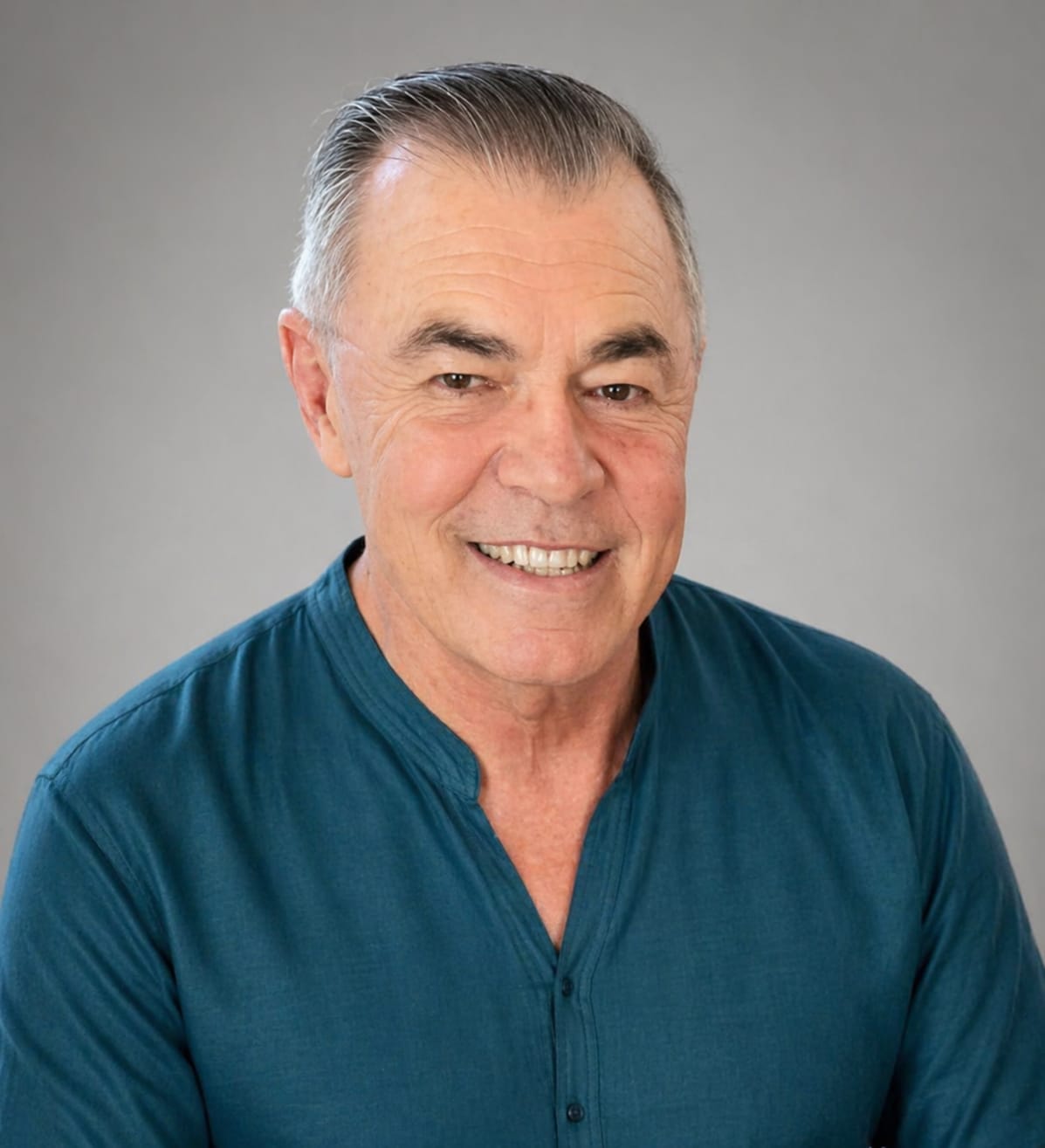
Julio Pavanetti (b. 1954, Montevideo, Uruguay)
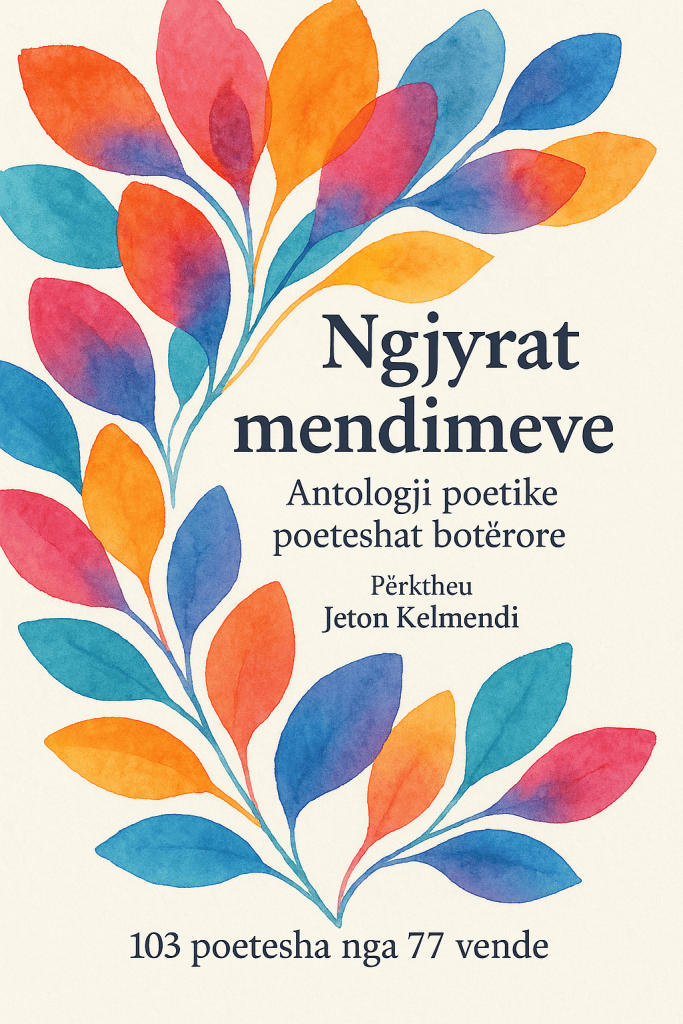
Poet and cultural promoter living in Benidorm, Spain, since 1977. Director of the World Poets Association “Liceo Poético de Benidorm”. Director of the International Poetry Festival “Benidorm & Costa Blanca” (FIPBECO), Spain. . Director of the poetry collection “Biblioteca Azul” of Editorial Germanía, Valencia, Spain. Director of the poetry collection”Azul”of Editorial Enkuadres, Alzira, Valencia, Spain. Associate Academic and Honorary Member of theNorth American Academy of Modern Literature (NAAML); Full Member of the TOMITANAAcademy of Tomis (Constanța), Romania. Member of the International Writers Association IWA Bogdani with headquarters in Brussels and Pristina (Kosovo). Honorary and Corresponding Member of the Circle of Venezuelan Writers. Member of the Associationof Spanish Writers and Artists (A.E.A.E.) Member of the Spanish Professional Writers Association(A.C.E.) Member of PEN Club Spain. Member of the Valencian Association of Writers and Literary Critics (C.L.A.V.E.) Member of C.E.D.R.O. (Spanish Center for Reprographic Rights) Hereceived many national and international awards and honors. He has published 13 anthologies with the Liceo Poético de Benidorm and 19 personal books, six of which were publishedin Romania (2), and one each in Greece, Albania, Italy, and India; four bilingual in English and Spanish; and one trilingual in Spanish, English, and Arabic. He has taken part in more than 150 anthologies. Many of his poems have so far been translated into 30 languages: English, Italian, Sicilian, Neapolitan, Catalan, Arabic, French, Romanian, Portuguese, Croatian, Czech, Serbian, Bosnian, Polish, Azerbaijani, Slovak, Albanian, German, Dutch, Japanese, Chinese, Korean, Bulgarian, Turkish, Malay, Bengali, Persian (Farsi), Vietnamese, Greek, and MycenaeanGreek (Linear B). They have been published in countless national and international newspapersandspecialist journals, both digital and in print. He has translated poems by various authors from English, Portuguese, and Italian, and has translated the book *Life Lives in Me*by the Albanian-Kosovar poet Jeton Kelmendi.
WHERE THE WORD STILL ENDURES
When the world becomes a wasteland
and cities raise their walls
higher than the ancient temples,
when the night learns
new names for fear
and man ceases to recognize himself
in the face of another man,
the word remains.
Not the word that commands,
nor the one that sells,
nor the one that shouts from the screens
to conquer the silence,
but that other one,
more fragile than a flame,
which trembles between the lips
and yet refuses to die.
It comes to us from far away.
It comes from an ancient square
where a man asked
what it means to live justly;
it comes from eyes that sought
the beauty behind things,
from those who raised columns
so that thought
might also have a home.
Greece has not died.
It still breathes
in every unanswered question,
in every verse that rebels
against barbarism,
in every gaze that refuses
to reduce the other to a number,
to an enemy,
to a name that can be erased.
But now the barbarians
do not always arrive with swords.
Sometimes they arrive clad in haste,
in indifference, in algorithms,
in words emptied of meaning.
Sometimes they set fires without raising flames
and destroy without toppling a single stone.
They leave man
with no time to think,
no silence in which to listen to himself,
no memory to recall
that he once believed
dignity was sacred.
And then poetry rises up.
It has no armies.
It has no borders.
It does not know how to make weapons.
It has barely
a single fiery word,
a heart that persists,
a page left open
in the dead of night.
But that is enough.
Because a verse
can preserve a name
when everyone else wants to erase it.
It can preserve a tear
when the world
has learned to call it a statistic.
It can give back a face to someone
who was nothing more than a headline.
It can say ‘you’ where others only say ‘they’.
That is why I do not write
to save the world
—perhaps no poem can do that—,
but to prevent the world from saving itself
at the expense of humanity.
I write so that beauty is not a luxury,
so that memory
does not turn to ruin,
so that the humanities
are not driven out
of the home they built
over the centuries.
I write because I still believe
that a human life
is worth more than its price,
that a tear
is worth more than a statistic,
that a single just word
can carry more weight
than a hundred speeches.
And as long as there remains
a voice capable of saying ‘no’,
a hand capable of writing ‘hope’,
eyes capable of looking
without turning away from pain,
poetry will still be there,
small as a seed,
stubborn as the light
that manages to shine through
a crack in the stone.
Perhaps it will not stop the storm.
Perhaps it will not bring down the walls.
But as long as someone reads
a verse to another human being
and both remain silent
after reading it,
Greece will continue to breathe,
beauty will still have
a place to take refuge,
and man, wounded,
weary, almost defeated,
will still have a word
with which to call
himself
human.
YOU ARE A WOMAN, A GUIDING MOON
Woman, you are not a name, you are the moon.
A moon that guides when the path is lost,
the light that clears a space amidst the silence,
the flame that asks for nothing, the radiance that returns
even when the night is deep.
You are the earth where life learns to speak,
but you are also the cycle, the rhythm, the tide
that rises and falls without ever being lost.
You are a gentle fire when darkness seeks comfort.
You are a mother, the first light the world sees,
the first home, the pulse that marks the beginning of time,
the one who teaches a small heart to beat without fear.
You are a daughter, a reflection that moves forward,
a promise that walks and makes its way,
like a stubborn seed in the midst of winter,
like a silver thread in the deepest darkness.
Woman, you are presence. Your strength makes no sound,
yet it is capable of moving the tides.
Your tenderness is an ancient form of resistance.
You are a bridge and you are a lighthouse.
I have seen you hold entire days with your two empty hands,
and yet, leave flashes of light in every gesture.
You are the secret current that moves the rivers.
I do not celebrate you, but I listen to you and acknowledge you,
and I let your light – the one that asks for no permission –
teach me to see with greater truth.
©® Julio Pavanetti






Leave a Reply